Stanislav Yevgrafovich Petrov, a Lieutenant Colonel of the USSR who decided to trust his own judgment over standing orders and did not unleash a nuclear holocaust when, in 1983, it appeared as if the US had launched a missile attack.
It's nice to know that (a) there was room human judgment in the system, and (b) the human involved made the right choice. Are we lucky or what? Things like this make me wonder about the anthropic principle. Perhaps in most universes we were incinerated and its just the happy few that had an intelligent and brave officer in charge at the right time that there are people around to celebrate.
Wednesday, September 26, 2007

Impressive futurism; misleading book titles
Pretty good call:
From Glut, by Alex Wright. Cutter was the inventor of the Library of Congress cataloging system. The practically one library bit is here.
On the whole I was disappointed by this book, which I was hoping would have some insight into the nature of thinking under conditions of infoglut. What it turned out to be is a history of information classification systems through the ages, from Sumerians to the web. Given that, it was pretty interesting. The author has a degree in library science and it shows. The treatment of Ted Nelson, which is the part of this history that I know best, is reasonably informed and fair, and he had some interesting things to say about the historical tensions between hierarchical and bottom-up organization.
Actually, this is an excellent book except for the title, which is misleading.
It's funny because I recently read another excellent book on a completely different topic: Defying Hitler, by Sebastian Haffner, and had the same reaction. It was an frighteningly insightful memoir of Hitler's rise to power and how the educated, well-intentioned classes in Germany were totally paralyzed. The title in no way reflects the contents -- it should have been called Capitulating to Hitler.
In 1883 [Charles Ammi] Cutter wrote a futuristic essay entitled "The Buffalo Public Library in 1983". imagining what a library might look like in 100 years, he envisioned readers sitting at desks equipped with "a little keyboard" through which they could connect with a central electronic catalog, ordering books form the stacks by punching in a call nmber. He even foresaw networks of libraries connected by a "fonographic foil" that would enable them to communicate telegraphically, accessing each others' collections so readily that "all the libraries in the country...are practically one library".
From Glut, by Alex Wright. Cutter was the inventor of the Library of Congress cataloging system. The practically one library bit is here.
On the whole I was disappointed by this book, which I was hoping would have some insight into the nature of thinking under conditions of infoglut. What it turned out to be is a history of information classification systems through the ages, from Sumerians to the web. Given that, it was pretty interesting. The author has a degree in library science and it shows. The treatment of Ted Nelson, which is the part of this history that I know best, is reasonably informed and fair, and he had some interesting things to say about the historical tensions between hierarchical and bottom-up organization.
Actually, this is an excellent book except for the title, which is misleading.
It's funny because I recently read another excellent book on a completely different topic: Defying Hitler, by Sebastian Haffner, and had the same reaction. It was an frighteningly insightful memoir of Hitler's rise to power and how the educated, well-intentioned classes in Germany were totally paralyzed. The title in no way reflects the contents -- it should have been called Capitulating to Hitler.
Sunday, September 23, 2007
Swords into plowshares
Surprising fact of the day:
I wonder what ever happened to space-based solar power generation? That was something I was interested in a few decades ago, but you don't hear much about it lately.
If I start getting into futurist mode I get very depressed. The world is going to go through some drastic changes in the next few decades. The biggest variable (which is not often discussed) is how fast things are going to go. If oil prices and climate change ramp up slowly, there will be time to adjust. If things go quickly, the result will be massive catastrophe. People and markets can adapt to anything, but it takes time. New technologies might help, but the cycle for developing and deploying a new technology is decades...and we've wasted the last couple twiddling our thumbs.
Oh well, this was going to be a happy post...it's certainly nice that we are turning old nuclear warheads into useful energy.
Anderson said that 10% of US electricity currently comes from recycled Soviet nuclear warheads.From a Long Now talk about nuclear energy. Which is apparently the least bad of options to supply the predicted doubling of energy demand by 2050. There's a bunch of questionable assumptions hidden in the argument as presented, some of which are addressed by the commenters. A huge nuclear infrastructure sounds enormously dangerous -- but then, so does burning a lot more fossil fuels.
I wonder what ever happened to space-based solar power generation? That was something I was interested in a few decades ago, but you don't hear much about it lately.
If I start getting into futurist mode I get very depressed. The world is going to go through some drastic changes in the next few decades. The biggest variable (which is not often discussed) is how fast things are going to go. If oil prices and climate change ramp up slowly, there will be time to adjust. If things go quickly, the result will be massive catastrophe. People and markets can adapt to anything, but it takes time. New technologies might help, but the cycle for developing and deploying a new technology is decades...and we've wasted the last couple twiddling our thumbs.
Oh well, this was going to be a happy post...it's certainly nice that we are turning old nuclear warheads into useful energy.
Friday, September 21, 2007
Voting as ritual
If voting could change the system it would be against the law, I used to say in my cynical anarchist days. But now I'm a good citizen, and anti-voting sentiment strikes me as puerile. I tried to respond to TGGP in-place and ran into some kind of bug (or moderation), so am replying here as well.
I think there's an interesting comparison to be made between voting as a ritual and religious rituals, in fact. The point of religious rituals is in their collective enactment. They don't "do" anything except foster a sense of solidarity amongst their participants. But this is not at all trivial. Voting may play the same role, with the endpoint decision being less important than the ritual, and the jealously fought-for rights to participate in it.
Libertarians have a problem with this. Either they can't understand it at all, or they equate it with North Korea's mass rallies. Or they feel threatened by it. I suspect that what's going on in many libertarians is that their sense of individual identity is so weak that it feels existentially threatened by acknowledging the social nature of human existence. The Ayn Randroids are the most notable in this regard.
The libertarian distaste for politics and voting guarantees that they will remain without influence -- a good thing from my point of view, but probably not yours.Voting is a ritual of social participation. The point of voting is not (as Landsberg stupidly holds) that it is only worth doing if you stand a chance of casting the single vote that tips the balance past 50/50. The point is that you are joining in with other members of your community to make a collective decision. The act of voting is a humbling and equalizing one -- in voting you (briefly) set aside your personal identity and personal power and act as just another equal citizen among others, willing to take the economic hit for the benefit of playing their small part in the collective political ritual.
Here are some of my thoughts on voting from a couple of years ago, see especially the link to the Valdis Krebs paper.
The Landsberg piece you link to is a typically autistic piece of economist crapola. The Freakonomics boys made the same argument and I answered them there (first comment).
I think there's an interesting comparison to be made between voting as a ritual and religious rituals, in fact. The point of religious rituals is in their collective enactment. They don't "do" anything except foster a sense of solidarity amongst their participants. But this is not at all trivial. Voting may play the same role, with the endpoint decision being less important than the ritual, and the jealously fought-for rights to participate in it.
Libertarians have a problem with this. Either they can't understand it at all, or they equate it with North Korea's mass rallies. Or they feel threatened by it. I suspect that what's going on in many libertarians is that their sense of individual identity is so weak that it feels existentially threatened by acknowledging the social nature of human existence. The Ayn Randroids are the most notable in this regard.
Thursday, September 20, 2007
Everything you know is wrong
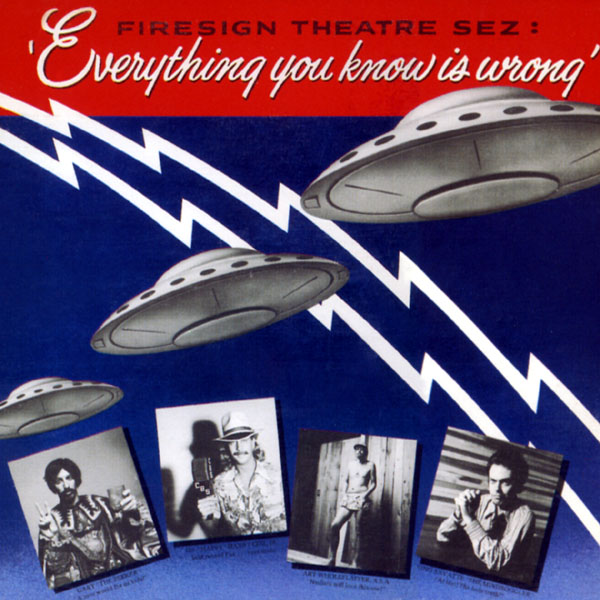 If by "you", I mean "science", and by "everything", I mean "most things":
In PLoS Medicine, John Ioannidis says:
There is increasing concern that in modern research, false findings may be the majority or even the vast majority of published research claims. However, this should not be surprising. It can be proven that most claimed research findings are false.This paper is written in an opaque style, but Alex Tabarrok clears up the murk. Bayes rules!
Wednesday, September 19, 2007
Marketeer Movies
I watched the first fifteen minutes of the Gary Cooper movie version of The Fountainhead, and it truly did suck as much as I had heard.
The following, however, rocks, in some weird sense of that word:
The following, however, rocks, in some weird sense of that word:
Sunday, September 16, 2007
Free-floating authoritarianism
While answering another blogger's apparent misinterpretation of a remark I made on yet another blog, I said this:
A related issue comes up again in this Reason article, where libertarians are confused by how conservatives claim to oppose a strong executive while simultaneously doing everything they can to strengthen it. The answer is, conservatism was never in principle about limiting executive power. The fact that they adopted that meme at all in the post-WWII years was just a reaction to Roosevelt and the New Deal, when the executive power was wielded for the benefit of the wrong kind of people. Now they are reverting to type, while still posing as somehow opposed to government. Conservatism craves strong government, preferably in the form of a daddy figure (check out the idiotic gushing over Fred Thompson's manly aromas for a window into this kind of thinking, which entirely eludes me).
The mystery is not their internal contradictions but that they can keep up the counterfactual marketing for this long, and how ostensible "libertarians" could play along with such authoritarian elements. But nobody every went broke underestimating the political acuity of the American public.
I'm not a conservative (except in comparison to Mencius Moldbug's plans to replace the entire sociopolitical system with something he's designing from first principles) so I'm not sure why you are directing your flames at me. In fact, if there are any actual conservatives in the Burke or William Buckley mode in American politics they are almost invisible. What we have instead in the Republican party is a sort of free-floating authoritarianism, with no tradition to appeal to.which struck me as insightful, if I do say so myself. Why does neoconservatism seem so unconservative? The modern Republican party seems composed of equal parts imperialist maniacs and religious yahoos. Neither of these factions seem very conservative, in the sense of a respect for traditional authority. But that's not surprising, since there are no strong traditions in America to adhere to. The essence of classical conservatism is a more or less irrational cleaving to tradition and traditional authority. What traditional authorities do we have here in America? The old WASP power structure, which was the closest we had, is mostly gone. Conservatism minus tradition becomes, in my new pet phrase, free-floating authoritarianism. Pity the poor conservatively-minded citizen with no reliable ruling class to show fealty to! He's liable to latch onto all sorts of ridiculous authority substitutes, such as TV preachers or George Bush or the Rudy Giulani.
A related issue comes up again in this Reason article, where libertarians are confused by how conservatives claim to oppose a strong executive while simultaneously doing everything they can to strengthen it. The answer is, conservatism was never in principle about limiting executive power. The fact that they adopted that meme at all in the post-WWII years was just a reaction to Roosevelt and the New Deal, when the executive power was wielded for the benefit of the wrong kind of people. Now they are reverting to type, while still posing as somehow opposed to government. Conservatism craves strong government, preferably in the form of a daddy figure (check out the idiotic gushing over Fred Thompson's manly aromas for a window into this kind of thinking, which entirely eludes me).
The mystery is not their internal contradictions but that they can keep up the counterfactual marketing for this long, and how ostensible "libertarians" could play along with such authoritarian elements. But nobody every went broke underestimating the political acuity of the American public.
Subscribe to:
Posts (Atom)