The Center for Spiritual Capital, Loyola University (New Orleans)
This looks like a rather strained effort to reconcile capitalism and Christianity, rather than what a literal reading of the name would suggest, that spirit itself is something to be accumulated, invested, and profited from. They do not seem to have had much problem coexisting in the real world despite their manifestly clashing values. But as always I strongly support the invention of new and slightly weird realms of discourse. Push that camel through the needle!
I'm also glad to add this moderately right-wing entry to the series; most of the previous ones were from the leftist/new age end of the spectrum. Fair and balanced!
Showing posts with label academic amusements. Show all posts
Showing posts with label academic amusements. Show all posts
Tuesday, February 07, 2012

Sunday, December 10, 2006
High-energy metaphysics
There used to be a door at MIT labeled Department of Alchemy. Maybe it's still there. It was (I think) a joke, but Stanford has an apparently real Metaphysics Research Lab. It appears to have something to do with automated theorem proving and the existence of abstract objects, something I've speculated about in the past in the context of religion. I seriously doubt whether formal logic techniques can have anything interesting to say about metaphysics, but I also have to acknowledge that I may just be too ignorant to appreciate the depth of ideas here.
Saturday, November 19, 2005
God and Mammon go together like peanut butter and jelly
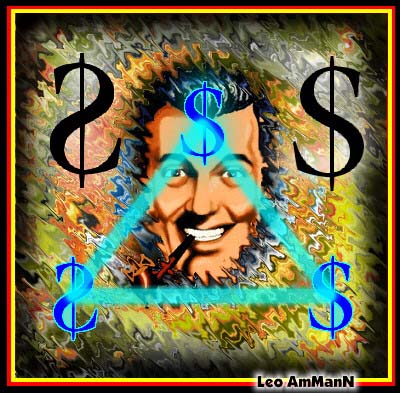
I realize I have similar relationships to economics and theology: I'm not a true believer in either, but I'm fascinated by the theories of both, and the little self-consistent model worlds they create. So I was doubly fascinated to see this debate on the nature of the relationship between economics and religion: Is Religion Rational? The Economics of Faith, a debate between Larry Iannaconne and Bryan Caplan.
More here.
Now, I thought that "Bob" Dobbs and L. Ron Hubbard had perfected the union of religion and moneymaking some time ago, but apparently there is more to it than that. The core of the theory seems to be investigating reasons why people might rationally choose to believe irrational things. I guess it goes back to Pascal's wager.
Here's a sample of the flavor:
The combined actions of religious consumers and religious producers form a religious market which, like other markets, tends toward a steady-state equilibrium. As in other markets, the consumers' freedom to choose constrains the producers of religion. A "seller" (whether of automobiles or absolution) cannot long survive without the steady support of "buyers" (whether money-paying customers, dues-paying members, contributors and coworkers, or governmental subsidizers). Consumer preferences thus shape the content of religious commodities and the structure of the institutions that provide them. These effects are felt more strongly where religion is less regulated and, as a consequence, competition among religious firms is more pronounced.Apparently it's a whole subfield (but what isn't). Seems pretty dry, and I'm dubious whether any meaningful concepts can bridge the gap between the radically individualist models of economics and religion, which if it's anything other than a scam is about getting outside of the egotistical, individualist frame of mind.
Another quote:
However one defines religion and religious goods, it is clear that religious activities involve a large amount of risk. The promised rewards may never materialize, the beliefs may prove false, the sacrifices may be for naught. In this respect, religion is the ultimate "credence good", a fact noted by several authors... Expected utility models might seem like the natural first step, but as Montgomery (1996b) has emphasized, objective religious "information" may simply not exist, leaving no rational way to assign probabilities to most religious claims.Uh, yeah, that could be a problem.
File under: amusing academics
Subscribe to:
Posts (Atom)