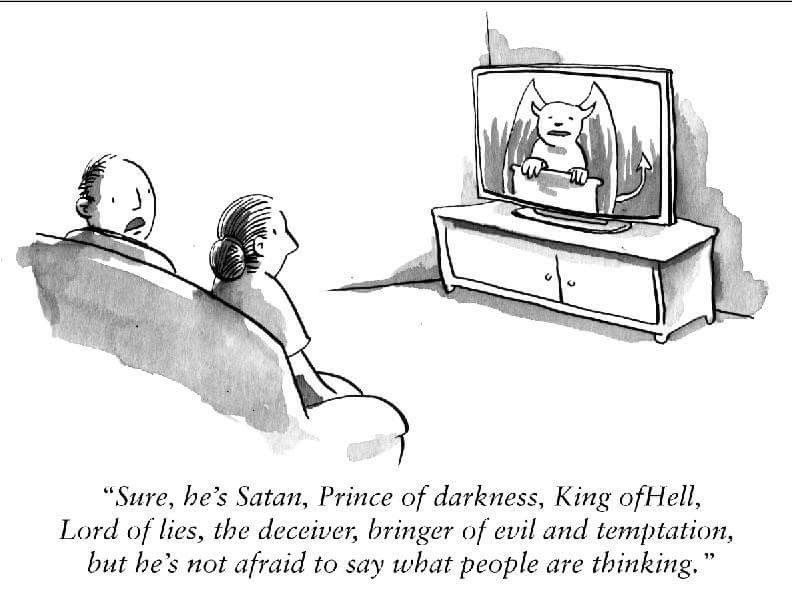
I use it from within, since I՚m almost certainly somewhere on the spectrum myself, although not officially diagnosed. Like blacks have a license to deploy the n-word and queers have taken back the word “queer”, people like me ought to have a license to deploy the a-word. Of course, the cases are not completely parallalel in all sorts of ways.
I use it not to insult individuals, but to critique certain sets of ideas that seem like attempts of some aspects of the autistic personality to convert itself into political ideology or other large-scale systems.
There are obvious problems with labeling ideas or worldviews as autistic. For one, autism as a syndrome has an extremely wide variety of expression. Very few people with autism start political ideologies or movements around their thinking. But it՚s a problem, because I do believe that my non-medical usage of the word denotes something real and important, and I can՚t think of a better way to describe it. Roughly, what I mean is “disdain of or distrust of or incompetance at normal human social interaction, coupled with a fondness and competence for abstractions and artificial formal systems”. This is a common feature of autism but is not identical with it and deserves its own designation. I՚ll call it a* for now (not to be confused with the graph search algorithm of the same name).
Why is it so important to have a designator for a* thinking? It has informed computation since its origins (Turing had classic signs) and is obviously endemic in the present-day technology industry, and that industry is in the process of “eating the world”. We are all living more and more of our lives inside systems designed with a bias towards a*. So unless you are a digital luddite you owe a lot to a*, all the wonderful information and interactions you have on the internet can be traced to these weird obsessives plying their talents towards abstraction.
On the other hand, let՚s take two example of where a* thinking may have some negative consequences.
Facebook is now in control of a large fraction of our social lives, and Facebook is a* in spades. There՚s nothing inevitable that says that the complexities of social interaction have to be reduced to a formal graph of “likes”, but that՚s what we have now. It՚s not so much that Facebook is bad, but that we are allowing the very fundamental structures of society to be redesigned by people who may not be the best suited to it.
On a lesser scale, Moldbug՚s thinking is an exemplary illusstration of a* thinking and its pitfalls. If you study his work in-depth (not recommended) it is clear his primary motive isn՚t racism or ethnoationalism, but a horror of conflict and uncertainty. Ordinary society and politics involves both vague boundaries of groups, imperfect mechanisms of control, and internal and external conflict between different centers of power. Moldbug՚s dream is to replace this mess with something well-engineered and clear, so that for any resource x, there is always exactly one agent a who controls it absolutely. This is not the place to examine this idea on its merits, just to notice that it՚s exactly the sort of thing that would be dreamed up by someone who sucks at navigating actual social structures but is great at constructing abstract systems.
To summarize: I would argue that a* thinking is a real phenomenon and an important one. That it has deep consequences for society which need to be understood better. Finally, it is not necessarily a bad thing if social life is changing in an a* direction, given how fucked up the default world is, but we ought to have better awareness of what is going on.
[ and here is one of my better guest posts at Ribbonfarm where I dive a little deeper into the a* mindset and what it means. ]
Here is a very common visual cliche that oddly doesn՚t seem to have an actual name (the title is best I could come up with):
There are hundreds of stock photos and movie stills in which someone simultanously covers their eyes and peeks through the fingers. What kind of sights can provke such a strange reaction, and what could be its function or meaning? Some prospects simultaneously draw one՚s attention and repel it, giving rise to an internal conflict. You shield yourself from the thing (but not in any truly effective way) and then undermine your own act. Who is supposed to be fooled by this looking-while-not-looking? If it was just a matter of modulating a disturbing incoming visual signal, surely the eyelids would do as good a job as the fingers?
It seems to be a clear outward form of an inner conflct, and inner conflicts are always interesting because they reveal something of the structure of the mind (a jumping off point for Freud, Tinbergen, Minsky, and Ainslie, to name only the most influential).
The conflict between fascination and horror comes up in my thinking a lot these days. I detect it in my attitude to onrushing catastrophes like climate change, or the Trump ascendency, or the aftermath of various natural or manmade calamities. And in my otherwise inexplicable fascination with neoreaction and other wingnutty emanations on the internet, which is sort of like a slow-motion trainwreck of the intellect. Or doom in general, which was a founding theme of this blog. My mind is drawn irresistably to such topics, then forced to draw back.
There՚s something almost shameful and twisted about it, although I can՚t quite say why. At least I՚m not alone in having this perverted attraction towards the repulsive. The entire US media apparatus seems to be in this kind of relationship with Trump, both horrified and addicted to the spectacle.
In my defense, I don՚t think the alternative of pretending these looming horrors don՚t exist is any better. It seems almost impossible to face them squarely, so this kind of half-assed playful attitude is probably the best I can do.
[ background: Moldbug was going to speak at another technical conference (LambdaConf), the organizers this time decided not to disinvite him when they discovered his political views, other people had very bad reactions, and pulled out, and the conference is basically falling apart.]
The reaction to this affair has been extremely polarized. People on both sides seem pretty certain that they are right. Either people are outraged by the racism, or they are outraged that a technical conference would dare to ban somebody for their racism. Doesn՚t seem to be a whole lot of middle ground.
But my own reaction is ambiguous, torn, waffling between two sets of incompatible values. This is interesting to me (although I՚m not sure it is interesting to anybody else, but nobody is forcing you to read this). I find it much more interesting to write about my uncertainties than my certainties.
David Nolen is one of the people most outraged. He՚s a major figure in the Clojure community, and also happens to be black, and he reacted to Moldbug՚s racism in the strongest possible terms, invoking powerfully charged images of racial oppression:
1) Pretend you are black like me.
2) Read some Moldbug.
3) Look at a bunch of lynching photos.
4) Profit.@lambda_conf
I՚ve thought Moldbug՚s stuff was pretty outrageous, but never really took it seriously enough to become personally offended or threatened. I was willing to debate him over it rather than pushing it away in horror. But I don՚t feel like I have any right to tell Nolen how he should feel about it.
I tried to imagine how I՚d react to race-hatred that was aimed more at me personally. What if a Nazi was going to give a talk on his exciting new programming language? Would I boycott the talk, or the conference? Would I demand the conference organizers shun this individual? I՚m not really sure. I think a lot would depend on the surrounding political climate. One weirdo anti-semite might be a joke to be laughed off, but if there are enough of them to constitute a political force, then the situation demands a political response.
This issue is very parallel to the Trump-related issues I was discussing in the previous post. This idea that there is a space of discourse in which anything goes, and is radically separated from the realm of action is a fine fiction, but a flimsy one.
My earlier post made one point that is still valid, and I haven՚t seen made elsewhere: that Moldbug as an anti-liberal has no grounds for complaint. That doesn՚t invalidate anybody else՚s concerns however.
This episode has caused a lot of bad feelings but I have an oddly positive take of it, from an oddly (for me) conservative point of view. Maybe it՚s a good thing that there are still some ideas that cause outrage, that will get you banned from polite society, that will cause good people to shun you. Boundaries are important. Turns out even in the advanced stages of late capitalism, there are codes of behavior. This is a good thing. Everybody knows liberalism doesn't extend freedom to infinity, but nobody knows what the boundaries are, so episodes like this are an instance of how we are in the process of figuring that out.
Donald Trump has managed to create an aura of violence and threatened violence around his campaign events. Everyone is getting alarmed by this, but I detect an element of bad faith in that reaction, because violence always lurks under the surface of politics. It՚s not beanbag, it՚s a competition for power, in this case for the right to be the most powerful single individual in the world, commander of the most powerful military force in world history, etc. We often manage to have such competitions peacefully, using just words and elections, but that seems rather exceptional in broad history of human society. Trump is ripping apart the fragile structures of liberal governance, which is a truly bad thing, but I am not overly surprised at their fragility.
Here՚s Rachel Maddow documenting Trump՚s ramp-up of violent language:
And here՚s an alarmingly titled but otherwise perfectly sober and accurate piece from Josh Marshall on the inevitable consequences: Someone Will Die.
It՚s interesting to see the varied leftish opinions about the Trump rally in Chicago that got canceled due to purported threats of violence (still isn't clear exactly what those threats were or who was making them). And by “interesting” I mean my own thoughts are not that clear. My natural first reaction is kind of the ACLU I-will-defend-to-the-death-your-right-to-say-stupid-and-repulsive-shit, a stance ably and politely represented on that page by Murc, who writes:
I kind of feel like it should be possible to simultaneously hold the opinion “Trump is running the fascist playbook, it’s appalling, and we should all be ashamed and angry” as well as “when someone takes the time to book out a venue and follow all appropriate laws and regulations, that should be respected and they should be allowed to do their thing.”
Judging by the rest of the thread, this is an unpopular opinion, but I’m gonna just come right out and say that merely being a fascist doesn’t mean the rules don’t apply to you. When Trumps brownshirts force some liberal rallies to be cancelled because they storm the place and raise a ruckus, rendering it unsafe (when, not if; that’s going to happen) we’ll all be outraged, and correctly so.
Against him, almost everyone else in the discussion.
I՚m torn myself. I value freedom of speech, but I don՚t really believe in some kind of absolute distinction between speech and action. You see this boundary blurred all the time in politics, that is what a demonstration or rally is after all, speech that is also a display of force. The debate about money in politics also blurs the line. So yes, I am a good liberal who believes in freedom of speech but I also believe it՚s a useful fiction – but that utility is limited, there are situations where it breaks down.
A liberal society is one that allows multiple points of view to exist and compete for power, which creates a paradox – at some point, there must be a practical limit to how far can it go it tolerating and accomodating its enemies. Given that there are all sorts of illiberal political forces out there, including the numerious variations of religious fundamentalism, racism, and toxic nationalism, how do you design a society where their illiberality can continue to live in private enclaves without being a threat to the order of the greater community?
The ACLU՚s defense of the Nazis right to march through Skokie back in the late 70s is paradigmatic for me (I grew up right next door in Evanston). Sure, let՚s allow a few pathetic and repellent adherents of a dead ideological enemy to parade around and get people angry at them. They pose no real threat, it is actually a sign of strength of the liberal order if you can let this sort of thing happen without forceful interference.
But at some point fascism stops being a fringe of harmess nuts and become a real threat. And somewhere along that line it becomes not just permitted, but almost obligatatory to oppose it, and not just with words, but with actions.
Has Donald Trump՚s quasi-fascist rhetoric crossed the line? Obviously he has no problem threatening the use of violence on protestors; does that justify violent tactics on their part?
In pure moral calculus, well sure. There is no earthly way in which you can pretend it is not Trump who has been constantly opening up the door to violence. That puts the responsibility for it squarely on his repulsive orange head.
In strategic terms it is almost certainly a mistake. The only conceivable consequences of violence at a Trump rally, whoever starts it, is increased support for him from the same febrile quarters it comes from now. It՚s the nature of the beast, and that is barely a metaphor. If there are really people so wishy-washy that they are undecided between Trump and a Democrat, which way do you think they will turn if it looks like society is in the throes of violent disintegration? Which side of this battle has more heavily armed lunatics?
So I hope that left protestors will use non-violent practices. But I can՚t condemn them if they don՚t. I՚m not a pacifist, some fights are worth fighting and this most certainly is one of them.
[ Bernie Sanders visiting the Woody Guthrie Museum ]
Seven years ago I noticed that Republicans had made “empathy” into a curse-word, and I joked that they were going to have to develop a reverse Voight-Kampff test to screen their candidates.
Today I think that was a little off. They aren՚t going for robotic non-empathy, but something darker, more like active anti-empathy. The leading Republican candidates, Trump and Cruz, are increasingly playing to their audiences with threats to commit mayhem on some outgroup. They will bomb them into glass, torture them, deport them. Mexicans and Moslems play the role of the despised Other for the most part, but the exact identity hardly matters, as long as they can be held at bay and made to suffer.
The enthusiasm for inflicting pain is beginning to seem kind of kinky at this point. Not that there՚s anything wrong with that! But this is reality and there is no safe word to end the scene.
Might there be some truth to the frequently-heard idea that Bernie Sanders and Trump enjoy some of the same sources of support, despite being opposites in every political and moral dimension? There is a lot of pain in the world, and people who are desperate can be tempted to clutch at anything that offers hope, the promise that the world can be a better place. Sanders proposes the idea (which seems radical and otherworldly, but shouldn՚t) that ordinary people should have a measure of economic security, Trump offers the promise of renewed strength, of triumph over the threatening darkness. I don՚t think these visions of a better world are at all equivalent, but they both stand in contrast to a candidate like Hillary Clinton who offers no hope at all for any fundamental change. That՚s practically her brand identity.
I know some Clinton supporters and they tend to be the kind of people who are doing alright for themselves, who have sussed out the rules of the existing system of power and made it work, often to very good ends. All very well I suppose, but the rest of us need our dreams.
The dream world of Trump and his supporters is one in which our pain ceases because we transfer it to the other, where all the losses of life are replaced by “so much winning”, where crushing and tedious social norms of bureaucratic society are overturned and the repressed can return in the form of displays of unrestrained assholery.
Trump repulses all respectable people, but obviously there are a lot of non-respectable people out there and the rules of politics means they get a voice, their hopes and dreams and fears can't be dismissed even if they deserve to be.
Marvin Minsky has passed on, to use a phrasing I feel pretty confident that he՚d dislike. He was a thoroughgoing materialist, so according to him there is nothing to pass on, no spirit to live on beyond the body. Let՚s just say his machinery gradually broke down, as they all do, and eventually ceased to function. He՚s rumored to have signed up for cryogenic preservation, for what that՚s worth, so there is the possibility of the machinery coming back into operating condition at some time in the future.
But whatever spirit animated him does live on, in the hacker culture that grew up around MIT and has since kind of taken over the world. Many people built that culture, but Marvin was at the core of the restless inquisitiveness, pragmatism, skepticism, and general disrespect of established institutions that characterizes it.
Everyone else who embodied this spirit gave their own twist to it, and perhaps Marvin՚s own special version is now lost until the digital resurrection. It almost doesn՚t matter. Marvin I think was somewhat disappointed, even bitter, in his later years, because the field he founded wasn՚t taking his ideas as seriously as he felt they deserved, and was going in directions he viewed as unpromising. If I could have had a last conversation with him, and felt presumptuous, I would tell him not to worry about any of that. The important part of who he was made it out into the world, embodied in the vast number of people he influenced.
Marvin was brilliant in numerous ways, an accomplished inventor, mathematician, and musician aside from the work on artificial intelligence he is best known for. But his big trick was to face squarely the mechanical nature of the human mind and not be alarmed by it. Indeed, he found it rather delightful and intriguing. This put him at odds with standard-issue humanists, which suited him just fine. But Marvin himself was not in any way inhuman, far from it. He was an extremely warm and welcoming individual, and always willing to engage with anyone՚s open mind.
He was I suppose a reductionist, but to label him that is to reduce his own complicated way of thought to a single-word slogan. And that was one kind of reduction he did not practice. His other big trick was to know that there is no one big trick to the mind, that single-idea solutions like logic or bayesianism are insufficient, and that building a mind requires the complex orchestration of multiple mechanisms. Society of Mind was itself structured as a cooperating network of very specific ideas for mechanisms, making the form match its content. He was an extreme fox on the Isaiah Berlinfox/hedgehog scale (while John McCarthy, a co-founder of AI who was more fond of logical formalism, might be his counterpart hedgehog). So he tried to take intractable concepts like selves and consciousness and “reduce” them to a complex interaction between mechanisms:
“The idea that there is a central I that has experience is a typical case of taking a common sense concept and not realizing that it has no good technical counterpart, but it has 20 or 30 different meanings and you keep switching from one to the other without even knowing it, so it all seems like one thing…Consciousness seems very mysterious and unphysical if you don՚t know how it works, like when Houdini or Penn and Teller make an elephant disappear, then you say “this is not physical, it՚s impossible”. When you know how the magic trick works, the sense of wonder goes away, although you still might remember how it puzzled you once.”
His life could be seen as a battle against the idea that understanding how something worked in any way diminished it.
It was truly a privilege and a gift to learn from him. I was far from an ideal student, and went off in directions he didn՚t really approve of. I was consumed by the specifics of the notion of “agent” that he developed – a subpart of the mind with its own machinery, goals, and ability to act – and tried to understand exactly what agency consisted of, what it meant, how it was deployed as a metaphor in technical talk in general. When Marvin wrote a a follow-up book, the The Emotion Machine, he decided to drop the agent language in favor of the more neutral “resources”. I guess he was unhappy at how people inferred from the agent metaphor that these components were full-fledged minds with sophisticated reasoning and representations of their own, in which case the theory didn՚t really explain anything.
This may have been sound tactics but I think it was a strategic mistake. The question of what agency is and what machinery could underlie it is important, and lack of good ways to think about it is responsible for some of the confusion in current discourse around the idea of superempowered artificial intelligences.
Marvin was a mathematician (albeit a very nonstandard one) and mathematicians have the job of pulling eternal truths into the temporal processes of life, cognition, and scholarship. Computation itself – an idea that he helped define – is also a way of connecting the timeless and the temporal. His time to be active has come to an end, and you can look back on his life and see how he was a creature of his time, how he learned from the great minds of an earlier time, and how he passed on his knowledge to the generations that followed. All of whom had their own visions, colored by their own times, yet retaining and transmitting some fragments of what was learned from their teacher.
Time marches on and cuts us all down eventually, but some part of us is timeless. Not godlike or soullike, Marvin wouldn՚t have any of that, but perhaps there is some quasimathematical pattern that our mechanisms embody and that precedes us, outlives us, and connects us.
The New Year is a time for the making (and the inevitable breaking) of resolutions, that is, attempts to commit yourself to some worthwhile goal that you would not normally have, or would not normally be able to achieve. The weakness of our ability to actually fulfill such promises has become a fairly tired cliche and material for reflexive jokes:
Comedy often involves puncturing pretension, so the resolutions are a fertile topic. But comedy aside, the whole exercise is pretty strange – a promise, in effect, that future versions of yourself will be bound by a goal of your present self. That might not seem so strange on the surface -- after all, we can, in normal circumstances, make ourselves do things that we don՚t naturally want to do, like washing the dishes or going to the dentist. We are always forming intentions and then making ourselves execute them, if usually on a smaller scale. If was can do that, why is it so difficult to make ourselves exercise or learn to play the piano? Somehow whatever tricks we've learned to do the minimum necessary unpleasant tasks to get through life won't extend to these more ambitious goals.
New Year's resolutions are generally intentions that we know we will have trouble executing, so we hope that the specialness of the holiday period will magically enhance our ability to enforce current preferences on our future selves. Why a random holiday should enhance our normal level of (perceived) willpower is not completely clear. Maybe because everybody else is doing it too? Maybe the special time of year is a sort of Schelling point where we all converge on trying to improve ourselves, agreeing to act as each other's consciences.
For me it՚s just another excuse to delve into my favorite topic – the disunity of mind, how the different parts interoperate and cooperate and/or conflict with each other. For some reason I like to try to demonstrate that I don՚t exist, at least, not as a unified coherent single point of control, and neither does anybody else, and that our precious selves are largely fictional constructs. Of course, everybody sort of knows this already, but living as if it were true is not easy, maybe impossible. The illusion of solidity is very strong and it sometimes seems as if the entire quotidian world is structured so as to perpetuate it.
George Ainslie probably has the most useful view of the nature of will in a seething non-unified mind. In his theory, the self is not an organ but a coalition, a point of convergence for the different appetites and the different situations they find themselves in. Self-construction is a process of creating, maintaining, and refining this tenuous balance of interests. That's the most challenging part of Ainslie: it's not that hard to believe that different parts of ourselves have goals of their own, since everybody experiences that, but it's a lot harder to understand that somehow these parts also have bargaining and political skills.
My resolution for the new year – or rather, the tentative constitution that my divergent interests temporarily agree to work under – is to understand goals better. in the abstract, and in my personal life as well.
I've never really had a great relationship to explicit goals. I՚m amazed at all these people I meet who have well-defined goals and plans, who have sketched out the routes they want their life to follow in advance. I've never really been able to do that, and occasionally it troubles me, although I seem to have managed to accomplish a few things and raise a family just by blundering around without much of a plan. No doubt I would have achieved a lot more with one, but on the other hand, how could the callow younger version of myself presume to tell the old and experienced person I am now what they should be doing? It՚s almost exactly the same problem as that of New Year's resolutions.
On the more workaday level, I really have come to loathe the way explicit goals are treated in in the process of software development, whether through old-fashioned formal planning or the trendier agile methodologies. It may be completely necessary in order for people to coordinate their work, but it still somehow manages to miss everything that is interesting and important about software design, which is never spoken of, possibly because we just don't have a good vocabulary for it yet or possibly because it is inherently un-articulable, like the Christopher Alexander's quality without a name.
Of course I have plenty of goals in my work on various scales. It's not the goals I mind, it's the process by which they are arrived at, both in setting them and fulfilling them. I'm not sure whether the process is broken or I am just too weird, intransigent, or immature to adapt to it. It seems to work, sort of, for most people and companies, although it is always the topic of endless dissatisfaction.
But it's the people with explicit long-term goals who seem to achieve things in this society, and perhaps in any society. I am impressed yet also somewhat repelled these types. Even when the goals themselves are laudable, they seem to be somehow enslaved to themselves. That may be a really negative way of seeing what is usually considered one of the primary virtues, the quality of having mastered yourself. But there can՚t be a master without a slave, even if they are the same person. A man with a plan sees other people, and himself, as means to an end, not as ends in themselves.
[ This post kicks off what I hope (nay, resolve!) will be a series of posts on different aspects of goals. Actually the recent post on play could be considered a part of the series. Tackling a topic of that size risks pomposity, and there is the additional risk of tiresome reflexiveness (yes I am being meta in having a goal about goals in general, but no I don't think it earns me any cleverness points). ]